

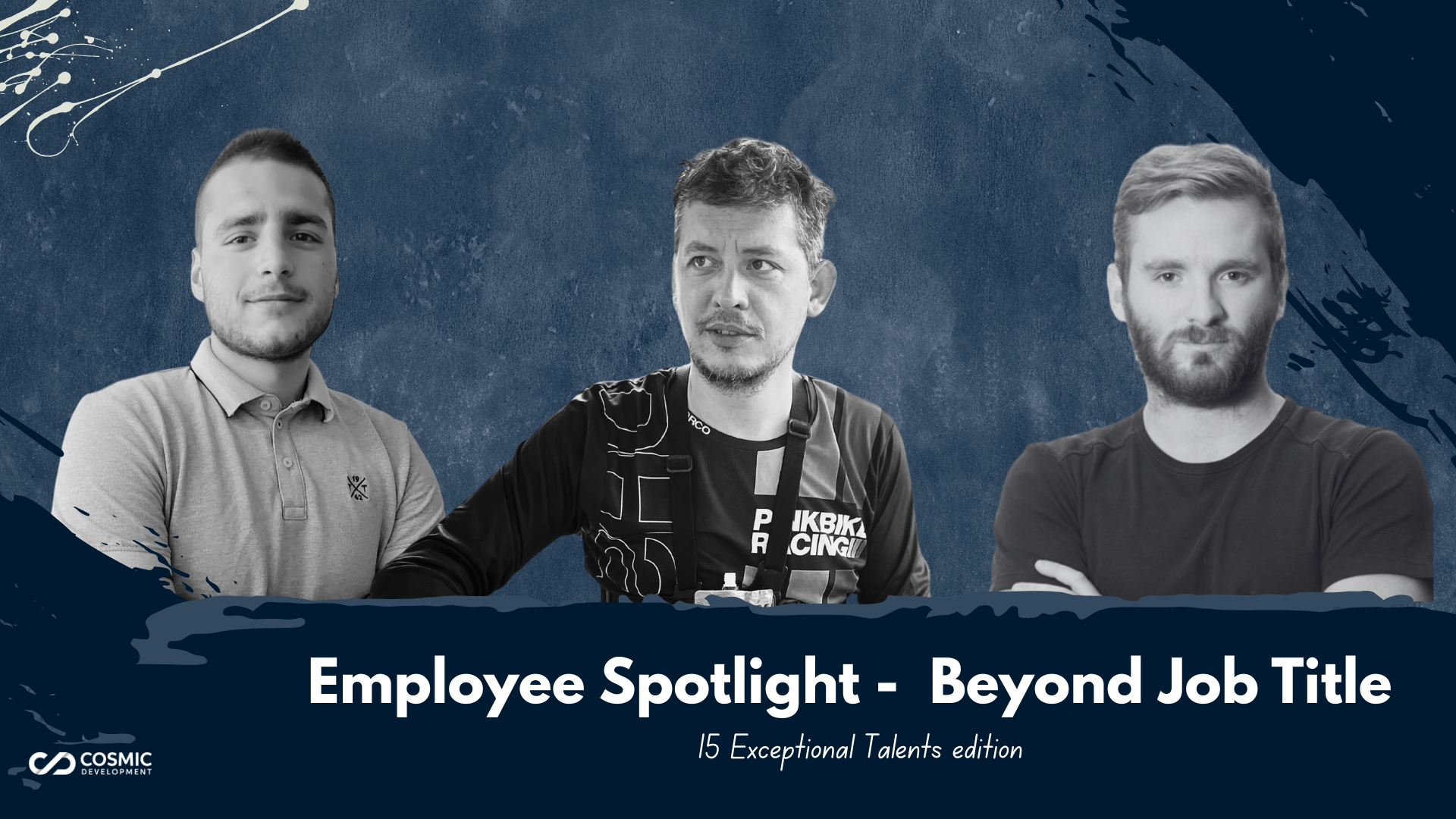

Some people recharge by slowing down. Others do it by going further, higher, deeper, or simply somewhere they haven’t been before.
The next chapter of 15 Exceptional Talents takes us outdoors, where Filip, Kosta, and Petar have found their own ways to challenge themselves, explore, and step outside the everyday through scuba diving, ultra-trail running, and mountain biking.
Different activities, different experiences, but all three are drawn to something beyond the physical challenge: being present, discovering what is out there, and occasionally learning something about themselves along the way.
Filip Tanurovski: Open Water Diver
Filip Tanurovski doesn’t sit still for long. Fourteen years into a career as a software engineer and now a father to a three-year-old, he has always had a sport on the go, eleven years of competitive swimming, five of water polo, a few rounds of kickboxing, and these days the gym. Water, though, has been the constant. So when a childhood love of snorkeling grew into something more serious, becoming a certified Open Water Diver was less a new hobby than the next step in a lifelong relationship with everything below the surface.
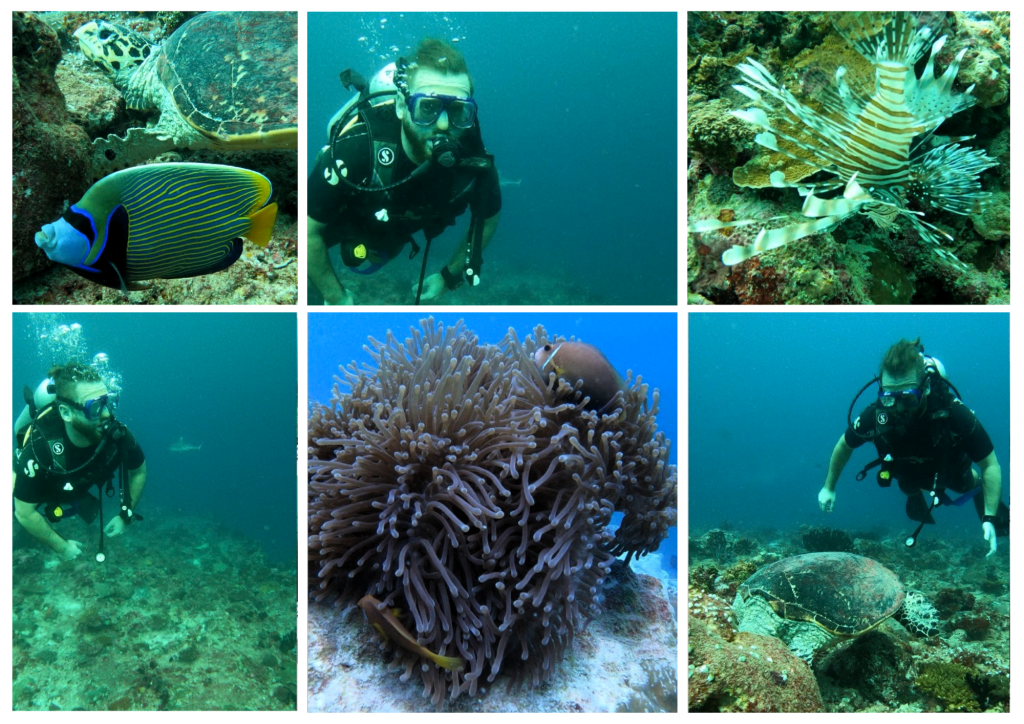
From Snorkeling to Becoming a Certified Open Water Diver
I’ve always enjoyed snorkeling, and liked spending time in and under water. The first time I dived was on a vacation in Montenegro when I was 15. It was the first time I spent 30 minutes underwater and had fish eat the remains of a sea urchin out of my hand. After that I was hooked.
Over the years I took the “Discover Scuba” course a couple of times while on vacation. The problem with Discover Scuba is that it doesn’t leave you with a license – you have to redo the intro training every single time, even if you already know how and have done it before.
So I decided to get certified. We were on vacation in the Maldives, and I couldn’t have asked for a better place for it – beautiful coral reefs, schools of fish, sea turtles, stingrays, sharks.
What Surprises You Most About Being Underwater
For me, it’s the calm. People expect the colors and the marine life, but they’re not ready for how peaceful everything becomes down there. You slow down, everything feels weightless, your breathing slows, and the constant noise in your head just settles. It’s one of the few places where I feel completely present, because you have to be – and that stillness is what stays with you long after you surface.
Can Diving Teach You Something About Everyday Life?
Absolutely. Diving teaches you to stay calm and breathe through problems rather than panic, which proves useful well beyond the water. On one of my certification dives, my mask flooded, and I got a bit of water up my nose. At 18 meters down, you don’t really have another option but to stay calm and work the problem: I pinched my nose, took a few slow breaths through my regulator (the mouthpiece), pressed the mask firmly back onto my face, and exhaled through my nose to clear the water out. It’s also taught me to trust preparation – if you’ve done the training and checked your equipment, you can handle whatever comes up.
Why He Keeps Going Back Underwater
No two dives are ever the same. In the Maldives alone, one dive I’d be gliding over a coral reef with schools of fish parting around me, and on the next I’d be watching a stingray drift across the sand or catching a shark cruising in the distance. You never really know what you’re going to get, and that keeps it exciting. But underneath the excitement, what actually keeps me coming back is that same calm – the weightlessness, the slow breathing, the feeling of leaving everything on the surface behind. It’s the closest thing I’ve found to hitting a reset button.
Kosta Sekulovski: Ultra-Trail Runner
Kosta has always been into sports and spending time outdoors. He enjoys anything that involves being active, exploring new places, camping, or simply getting away from the usual routine. He’s always been drawn to new experiences and a bit of adventure, which eventually led him to trail running.
His career took a different path, into technology and data. He discovered that field along the way, but his analytical and problem-solving mindset made it a natural fit. Today, he combines both sides of his personality, working with data and technology during the week and spending his free time running, exploring trails, traveling, and seeking the next adventure.
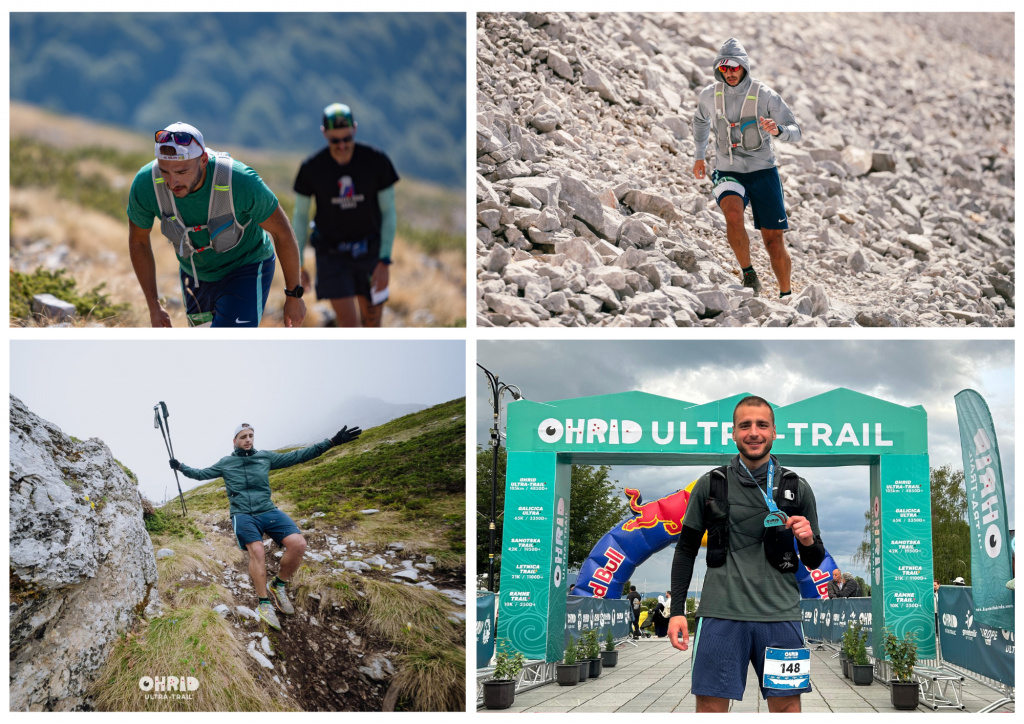
When a Trail Race Feels More Like an Adventure
I actually ran my first trail race before I ever ran my first marathon, and I think that was the moment I fell in love with trail running. I’ve always been an adventurer by nature. I love exploring, discovering new places, and not always knowing exactly what’s waiting around the next corner. For me, trails have that sense of mystery and adventure that you simply don’t get in the same way on the road.
My first trail race was 32 kilometers. It was hard, but interestingly, I never really saw it as a race. It felt more like an adventure that I happened to be doing with other people. And when I finished, I felt great, actually better than I had after some of my road races. That feeling made me want to keep going.
From there, I started signing up for longer and more challenging races, not necessarily because I wanted to prove something through a particular distance, but because I wanted to see what was possible and experience something new. Each race became another opportunity to test my limits, spend hours in nature, and see how far I could push myself.
So for me, it’s really the thrill of adventure, the feeling of going into the unknown, testing my limits, and pushing through those moments when my body starts to give up. There’s something very rewarding about seeing how far you can go when things get difficult and you have to rely on more than just your physical ability.
When the Mind Has to Carry the Body
I’ve learned that these races are much more mentally challenging than they are physically. Your body will eventually reach a point where it starts to struggle, especially in the longer races, but I’ve found that you get through those moments by keeping your mind together and continuing to move forward.
I’ve had plenty of physical challenges during these races, but I always try to remind myself that those moments are temporary. If I can keep my head clear and keep moving, eventually they pass. Sometimes you don’t need to think about the finish line or how many kilometers you still have left. You just focus on the next step, and then the next one. The body can struggle, but the mind determines whether you continue.
These races have taught me that I’m much more resilient than I ever thought I was. There have been moments when I was physically exhausted and genuinely questioned whether I could keep going, but somehow I always found a way to take the next step. I’ve learned that no matter how difficult a challenge feels in the moment, I’m capable of getting through it as long as I don’t let my mind give up.
Taking the Next Step, On and Off the Trail
I think one of the biggest things these races have taught me about myself is that when you’re in a really difficult moment, it can feel like things won’t get better. But they always can, as long as you keep going. Just like in a race, life will throw difficult moments at you, and sometimes all you can do is keep your head together and take the next step.
I’ve learned that you don’t always need to have everything figured out or know how a difficult situation is going to end. Sometimes you just need to stay calm, focus on what you can control, and keep moving forward. Eventually, you regain your momentum, and what seemed impossible a while earlier starts to feel manageable again.
That’s probably one of the most valuable lessons I’ve taken from trail running. No matter how difficult a moment feels, it doesn’t mean it will stay that way. If you stay patient, keep your head clear, and continue moving forward, things can change.
Petar Shokarovski: Mountain Biker
For Petar, mountain biking has never really been about competition. It is something he does because he genuinely enjoys it, from the demanding climbs and technical trails to the time spent outdoors with friends.
What started in his mid-thirties has become a regular part of his life, taking him to different mountains, trails, and races along the way. There is always somewhere new to ride and another route to figure out, but just as importantly, there is the simple pleasure of getting on the bike and wanting to do it again.
Discovering Mountain Biking by Accident
I had an idea — a somewhat poetic idea — that in 2020 I would climb Triglav in Slovenia. So I started physical preparations a year earlier.
One random weekend, a friend and I were planning to go out training on Sunday, but it rained the day before and the trails were all mud. My friend said, maybe we can climb the asphalt road instead. I replied: noooo, that’s too boring — let’s do the asphalt on bikes.
And just like that, we were climbing. For me it was the very first time on a bike in the mountains. When we reached the top I felt an accomplishment like no other before. Maybe it was only because it was my first climb on a bike. But the best was yet to come.
My friend knew an old tractor road down the mountain, so instead of taking the asphalt we went that way. The very first moment my tires touched that ground, I knew. This is what I was born to do. The nature, the trees, the carefree laughter, the birds, the gliding through the air, the speed. I even got a puncture, patched it trailside, and was happy about it.
So I just knew. This is it.
And I never did climb Triglav.
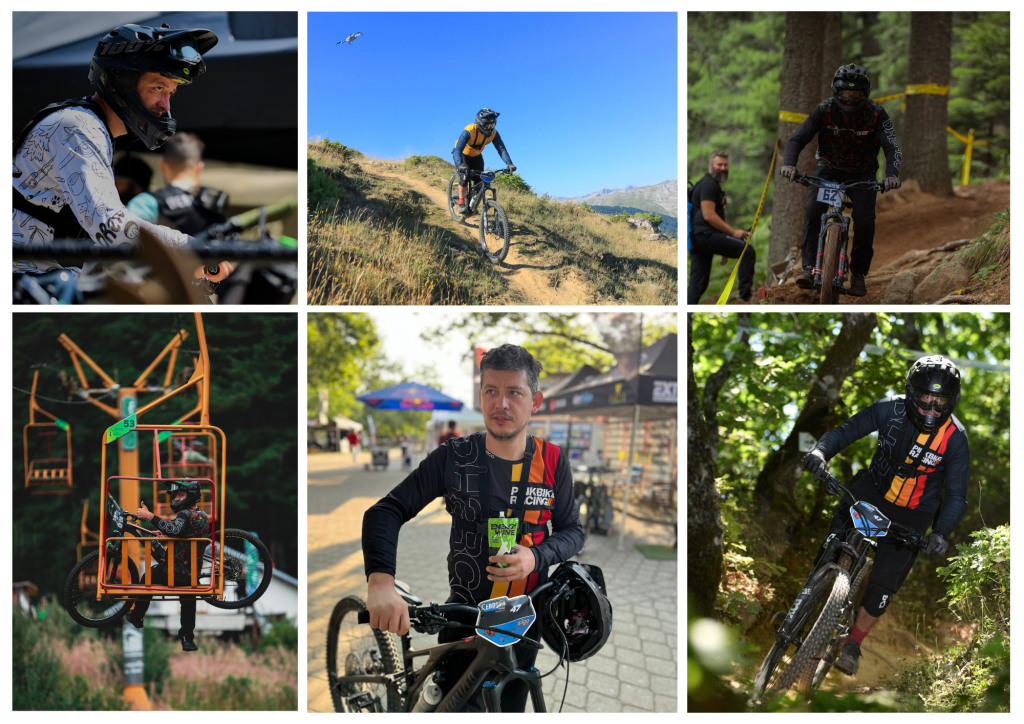
What Makes Mountain Biking So Enjoyable
Like I said, it’s a combination of many things.
To go to the gym you have to force yourself every morning. Come on, let’s go to the gym! But with mountain biking, at least for me, it’s not like that. I enjoy it. It’s fun. It clears my head during the heavy climbs — I get time to spend with my own mind and work through problems. And all of that while you’re on a mountain, on a misty morning, with birds chirping.
Then you get that rush of happiness when you reach your peak. And like you’ve crossed some kind of purgatory, from that point on the path is mostly downhill 🙂 Childish happiness, speed, wind, and a clear head all the way home. As a bonus, you got a free cardio session.
So what’s not to like about mountain biking?
Racing and Exploring: Two Sides of the Same Ride?
Well, to be honest, I’m not a competitive person. I do race, but for me, racing is a way to discover new places.
I usually go to races with my group of friends because, for us, a race is the easiest way to agree to do something. It’s already booked — you just need to show up. Otherwise, we’d have to plan everything ourselves, and there’s always someone who’s busy, can’t make it, or has some similar problem.
I also race to support the communities organizing these races. These are mostly small clubs that move mountains to put an event together, so it’s nice to show them some support.
For me it’s always about the scenery and how a place makes you feel. Mountains, although similar in shape, are very, very different in nature — some are rocky, some are rooty, some have trees, some are bare, some have rivers, others are bone dry. Every mountain gives you its own distinctive feel.
So to answer the question: I don’t really see them as two sides. It’s all the same thing to me.
What Mountain Biking Teaches Beyond the Trail
First of all, that “I too” can be active and get cardio training, without having to force myself into it or say “let’s start next Monday.” When you love something, you just wake up and do it.
Second, that I could start mountain biking in my mid-thirties. People often have this misconception that it’s a hard sport, that it’s for kids. In fact, it’s a sport like any other — a skill you develop, the same as anywhere else. And it’s not just for kids.
It taught me the meaning of the word proprioception, and it helped me work on my balance. Mountain biking is also a kind of cognitive training — your mind is making millions of calculations and split-second decisions, analyzing sensory data at high velocity.
And developing your skills means learning to find the best line down a trail, the cleanest one. That’s the part that’s most relatable to real life. It teaches you how to avoid obstacles and navigate the cleanest line toward your goal.